
History · Information Technology · Software
The history of Linux and GNU: how free software won the machine room
By 1991 the free-software movement had built everything except the one piece that mattered most: a kernel. A 21-year-old student in Helsinki posted a few hundred words about a hobby project, and the two halves clicked together. The result runs most of the world's computing.
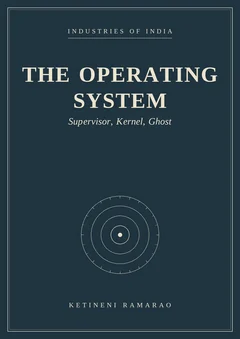 From the book The Operating System: Supervisor, Kernel, Ghost
Chapters 17 to 22. Read the full book free as a PDF.
Freedom as method
Richard Stallman worked at MIT's Artificial Intelligence Lab through the 1970s and watched its hacker commons die. The famous trigger was a printer: the lab had always patched its printers' software, and when a jam-prone Xerox machine arrived without source code, and a colleague refused to share it because of a non-disclosure agreement, Stallman saw the shape of the new world. Software was becoming property, and property meant strangers could forbid you from fixing your own tools.
His response, posted to Usenet in September 1983, was a declaration of method: he would write a complete Unix-compatible operating system and give it away as free software - free not in price but in the user's freedom to run, study, modify and share. He called it GNU, a recursive pun: GNU's Not Unix. Through the 1980s the project produced superb components - the Emacs editor, the GCC compiler, the debugger, the shell - everything except a finished kernel. Stallman's other creation compensated: the GNU General Public License of 1989, whose copyleft clause says that anyone redistributing the software must pass on the same freedoms, source included. The GPL turned generosity into an enforceable system.
The teaching kernel
Meanwhile Andrew Tanenbaum, a professor in Amsterdam, faced a teaching problem: Unix had become commercially restricted, and students could no longer read its source. His answer was MINIX, released in 1987: about 12,000 lines of code, a from-scratch Unix workalike for the IBM PC, published with every line explained in his textbook. For the first time, anyone who could buy a book could study a complete working operating system. Students worldwide did. One of them, in Helsinki, bought the book specifically to learn operating systems and ran MINIX on his own 386.

Just a hobby
On 25 August 1991, Linus Torvalds posted to the comp.os.minix newsgroup: "I'm doing a (free) operating system (just a hobby, won't be big and professional like gnu) for 386(486) AT clones." He admitted it was not portable and might never support anything but his own hard disk. Every hedged prediction in the message turned out to be wrong. He had started with a task-switching experiment, grown it into a terminal emulator, and then - because he wanted to read files - into a kernel. Version 0.01, posted in September 1991, was ten thousand lines.
The timing deserves attention. In 1991-92 the free-Unix world was frozen by AT&T's lawsuit against BSD; commercial Unix was expensive; the 386 PC was suddenly powerful enough for real work. Into that gap walked a hobby project. In early 1992 Torvalds relicensed it under the GPL - he has called it the best decision he ever made - and the two incomplete projects, GNU's tools without a kernel and Torvalds's kernel without tools, clicked together like halves of a hinge.
Declared obsolete at birth
The system's first famous review was a death certificate. On 29 January 1992, Tanenbaum posted a message titled "LINUX is obsolete", arguing that the monolithic kernel - one big program doing everything - belonged to the past and that the future was the microkernel. Torvalds replied in kind. The debate ran in public, in front of the entire internet, and history issued the verdict without a referee: where capability and hardware breadth mattered, the big kernel won utterly; where provable reliability mattered, the small kernel won completely - QNX is embedded in a great many of the world's cars, and in one irony Tanenbaum savoured, Intel's Management Engine, a hidden computer inside hundreds of millions of chipsets, runs a modified MINIX.
The quiet conquest
What made it grow was the licence and the cadence: release constantly, fold strangers' patches back within days. Within two years the system ran a windowing system, networking and the GNU toolchain; within ten, it was the dot-com boom's default engine. When the kernel's patch workflow outgrew its proprietary tool in 2005, Torvalds wrote git in weeks - now the default infrastructure of all software. The kernel today holds roughly 40 million lines from tens of thousands of authors, with about 75,000 changes landed in 2024 alone, on a release rhythm of nine to ten weeks.

The victories are quiet ones. Every one of the 500 fastest supercomputers has run Linux since November 2017. W3Techs reported on 3 November 2026 that Unix-family systems ran 92.2 percent of the websites whose operating system it could identify, with Linux alone at 63.3 percent. Every Android phone - more than three billion devices - runs a Linux kernel. And when IBM paid 34 billion dollars for Red Hat in 2019, it was buying position in a layer nobody owns. The hobby became infrastructure, and the infrastructure belongs to no one, which turned out to be its commercial superpower: every company can bet on it without strengthening a rival. As for what to call the combination, Stallman insists on GNU/Linux, and the argument is really about which half of the story matters more: the vision that defined the goal, or the accident that finished it.
Quick answers
Is Linux an operating system or a kernel?
Strictly, Linux is the kernel - the privileged core written by Torvalds and thousands of contributors. A usable system combines it with tools, largely from the GNU project, which is why Richard Stallman insists on the name GNU/Linux.
Why is Linux free?
By licence, not by accident. Torvalds adopted the GNU GPL in early 1992: anyone may use, modify and redistribute the code, but must pass on the same freedoms with source included. The licence made improvements flow back, which is why companies contribute.
Who owns Linux?
No one. Torvalds holds the trademark and leads the project's releases, but the code belongs to its thousands of contributors under the GPL. That ownership vacuum is commercial infrastructure: every company can build on it without strengthening a rival.
Sources
- Richard M. Stallman, the original GNU announcement, net.unix-wizards, 27 September 1983
- ACM award citation for Andrew S. Tanenbaum
- Linus Torvalds, comp.os.minix announcement, 25 August 1991 (archived copy)
- Phoronix, Michael Larabel, "Linux Git Stats for 2024"
- IBM Newsroom, "IBM completes acquisition of Red Hat" (9 July 2019)
- Linux Foundation, "Linux dominates supercomputing" (20 November 2017)
- W3Techs, "Usage Statistics and Market Share of Operating Systems for Websites", November 2026
- Android Central, "Google announces there are 3 billion active Android devices" (2021)