
Explainer · Consumer Staples · Beverages
How Scotch whisky is made, and what the law requires
Scotch is not a style. It is a legal definition. A spirit has to meet every clause of a 2009 statutory instrument before it can carry the name, from the grain to the cask to the strength in the bottle.
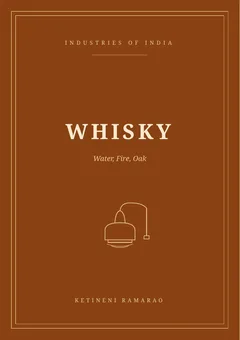 From the book Whisky
Chapters 4 to 14. Read the full book free as a PDF.
The definition
The Scotch Whisky Regulations 2009 define Scotch as a whisky produced in Scotland. It has to be distilled at a distillery in Scotland from water and malted barley, to which only whole grains of other cereals may be added. The mash has to be processed at that distillery, converted into a fermentable substrate only by the grain's own enzymes, and fermented only by adding yeast. It has to be distilled to less than 94.8 per cent alcohol by volume, so that it keeps an aroma and taste from its raw materials. It has to be matured only in oak casks of no more than 700 litres, only in Scotland, for at least three years. Nothing may be added except water and plain caramel colouring, and it has to be at least 40 per cent alcohol by volume at bottling.
Malt and grain are different products
Single malt Scotch is made at a single distillery from water and malted barley, with no other cereals, in pot stills, according to the regulations. Grain whisky is made in a patent still, also called a Coffey still. The SWA handbook says the grain mash includes some malted barley with unmalted cereals, which are cooked under steam pressure, and that the spirit comes off at a much higher strength. Blended Scotch combines the two. The SWA says almost nine in ten bottles of Scotch sold are blends, and that a master blender can combine up to 60 different whiskies.
Malting, mashing, fermenting
The handbook describes the barley being soaked for two or three days in steeps, then spread out to germinate for 8 to 12 days, turned regularly to control temperature. Kilning stops germination. Most malt is now made in central maltings, or in Saladin boxes or drum maltings that control the temperature mechanically. Peat smoke in the kiln gives the smoky flavour of some Scotch, the SWA says. The grist is mixed with hot water in the mash tun, the wort is drawn off, and yeast ferments it for about two to three days, a peer-reviewed review reports, at up to 32 to 33 degrees Celsius.

Two distillations
In malt production, the first distillation in the wash still separates alcohol from the fermented liquid and removes yeast residue and unfermentable matter. The result is low wines, which the review puts at 25 to 30 per cent alcohol. The second distillation, in the spirit still, is where the cut is made. The Undiscovered Scotland guide describes the spirit safe, a padlocked brass-and-glass case through which the spirit passes. The first part, the foreshots, is sent back to the low wines and feints receiver. As the run continues, the strength falls, and when it reaches a point between 70 and 60 per cent alcohol, the flow is switched away from the spirit receiver and back to be redistilled.

Why a locked box
The safe's design comes from tax. Its origins date to 1823, when the duty laws changed to allow small Highland distilleries to operate legally. Its purpose is to let the distiller manage the spirit without touching it, and until 1983 the only keys to its padlocks were held by the local Customs and Excise officer. ScotchWhisky.com records that in 1821 Aeneas Coffey and a fellow excise inspector tested a spirit safe designed by Captain Pottinger at a distillery in Carrickfergus, and that the Excise adopted it with modifications.
Filling and maturing
The SWA says new spirit is usually reduced to 63.5 per cent alcohol before it is filled into casks. Maturation in oak must last at least three years. The SWA handbook says the cask is permeable, letting air in and evaporation out, which removes the harsher parts of the new spirit. The Glenlivet puts evaporation at around 2 per cent a year in Scotland, and says the loss is highest when the spirit is young, around 3.5 to 4 per cent in the early period.
Regions
The 2009 regulations define five traditional regions or localities for single malts: Campbeltown, Highland, Islay, Lowland and Speyside. The SWA says other factors, including the size and shape of the stills, also affect character, and that a taller still tends to make a lighter spirit. It also says finishing, a further short period in a cask that previously held wine or other spirits, is an extension of maturation, and that the finishing cask must have been emptied first.
Read next
For the overview of every step, see how whisky is made. For the stills themselves, see pot still vs column still.
Quick answers
What makes a whisky Scotch?
It must be made in Scotland from water and malted barley (with only whole grains of other cereals), distilled below 94.8 per cent alcohol, and matured in oak casks of 700 litres or less for at least three years. Only water and plain caramel may be added.
Is Scotch distilled twice?
Malt Scotch typically goes through two pot-still distillations: a wash still and a spirit still. Grain whisky is run through a continuous patent still.
Is most Scotch a blend?
Yes. The SWA says almost nine in ten bottles sold are blended Scotch.
Sources
- The Scotch Whisky Regulations 2009, regulation 3 (legislation.gov.uk)
- Scotch Whisky Association handbook, chapter 3 (Edinburgh mirror)
- Scotch Whisky Association, FAQs
- Walker and Stewart, "Saccharomyces cerevisiae in the Production of Whisk(e)y", Beverages 2(4):38 (2016)
- Undiscovered Scotland, "The Spirit Safe"
- ScotchWhisky.com, "Whisky heroes: Aeneas Coffey"
- The Glenlivet, "What is the angels' share?"