
History · Materials · Paper and Forest Products
History of papermaking: from Cai Lun to the endless web
Every civilisation wanted the same thing: a surface that could remember. Papyrus grew in one swamp, parchment cost a herd, and bamboo was heavy. Paper won because it could be made anywhere, from anything, cheaply.
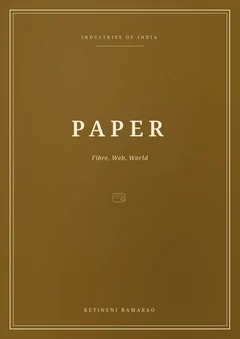 From the book Paper: Fibre, Web, World
Chapters 1 to 17. Read the full book free as a PDF.
Tradition credits the invention to Cai Lun, a eunuch of the Han court, who around 105 CE formed sheets from macerated bark, hemp waste, old rags and fishnets. His paper was superior in writing quality to silk and far cheaper, and the recipe, beaten fibre suspended in water, lifted on a screen and dried, is still the definition of paper.

Before paper
The surfaces paper replaced each carried a geography. Papyrus, pressed from the pith of a Nile sedge, was a monopoly of the river that grew it. Parchment was scraped animal skin, durable but costly. China wrote on bamboo slips and silk, one heavy, the other dear. The sheet that won had to be makeable anywhere, from waste, by anyone.
The road west
For five centuries the craft stayed Chinese, refined into the xuan papers of the calligraphers and carried to Korea and Japan. Paper reached early Islamic Central Asia, with Samarkand a familiar stop in the story; the traditional account dates this to 751, but the origin story is disputed, and by 793 Baghdad had its first paper mill. The Arab world built the first paper civilisation: mills, paper markets, bureaucracies and libraries running on the sheet. Paper reached Europe through the Islamic world.
Gutenberg's appetite and the rag famine
The printing press multiplied the demand for sheets beyond anything the rag trade could grow. For three centuries paper was rationed by the supply of old cloth, and by the end of the eighteenth century the arithmetic had broken: readers were multiplying faster than rags. The search for a new fibre became one of the era's industrial obsessions, and it ended with a tree.
Paper for the masses
Cheap paper remade culture. The penny press put a newspaper in every hand, the railway bookstall put fiction in every bag, all of it built on the falling price of the sheet. What the rag sheet had done for the Renaissance, the wood-pulp sheet did for the reading public of the twentieth century.
The machine and the tree
Two inventions freed paper from the rag bag. First the machine: Nicolas-Louis Robert's 1799 patent for the moving wire he had prototyped in 1798, which made an endless sheet, made practical by the Fourdrinier brothers' machine of 1807. Then the fibre: groundwood pulp, first made in Germany in the early 1840s, which ground the whole log into furnish, followed by the chemical processes, soda, sulfite, and finally Dahl's kraft, developed in 1879 and patented in 1884, that cooked the lignin away and left cellulose-rich fibre, which could then be bleached white. Cheap wood-pulp paper made the penny press, the paperback and the cardboard box possible, and it also made the acidic, self-destructing books the world's archives are still racing to save.

Read the full history, from the first sheets to the managed forest, in Paper: Fibre, Web, World, free to read online.
Quick answers
Who invented paper?
Tradition credits Cai Lun, a Han court official, who around 105 CE made sheets from bark, hemp waste, rags and fishnets.
How did papermaking spread west?
It reached early Islamic Central Asia, with Samarkand a familiar stop although the traditional 751 origin story is disputed, and Baghdad had its first paper mill by 793, and paper then reached Europe through the Islamic world.